
The Pros and Cons of Using AI Chatbots in HR Management

Written By : Shantilal Matariya

Published on : July 23, 2025

5 min read
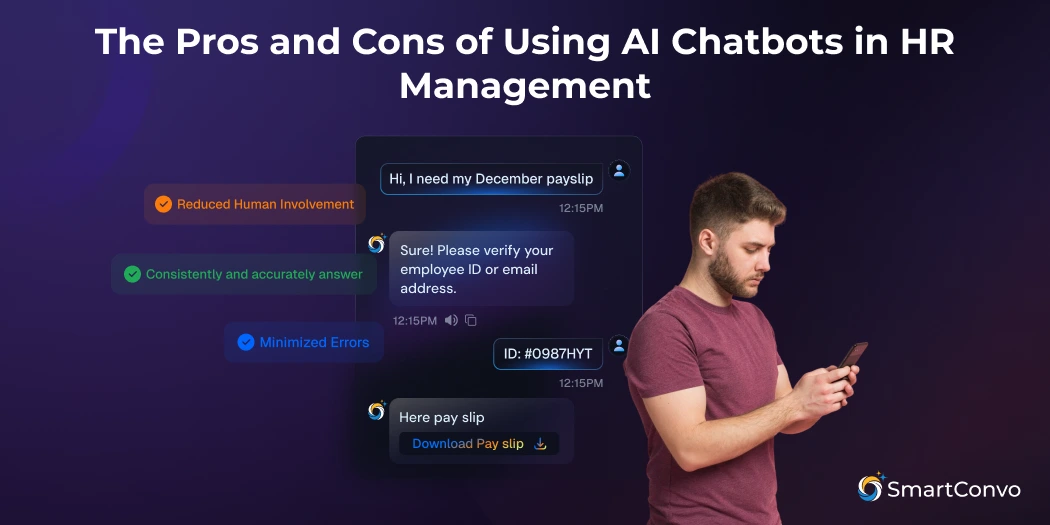


In recent years, AI chatbots have revolutionized various industries, and Human Resources (HR) is no exception. Organizations are increasingly adopting AI-powered chatbots to streamline HR functions, improve employee engagement, and enhance recruitment processes. But, like any technology, AI chatbots come with their advantages and limitations. In this blog, we’ll explore the key pros and cons of using AI chatbots in HR management to help you understand whether this technology fits your organization’s needs.
What Are AI Chatbots in HR?
AI chatbots are computer programs designed to simulate human conversation using natural language processing (NLP) and machine learning algorithms. In the HR context, chatbots can assist employees and HR teams by automating responses to frequently asked questions, facilitating recruitment and onboarding, managing payroll inquiries, and much more.
By handling repetitive and time-consuming tasks, AI chatbots aim to free up HR professionals to focus on strategic, value-added activities that require human insight and empathy.
The Pros of Using AI Chatbots in HR
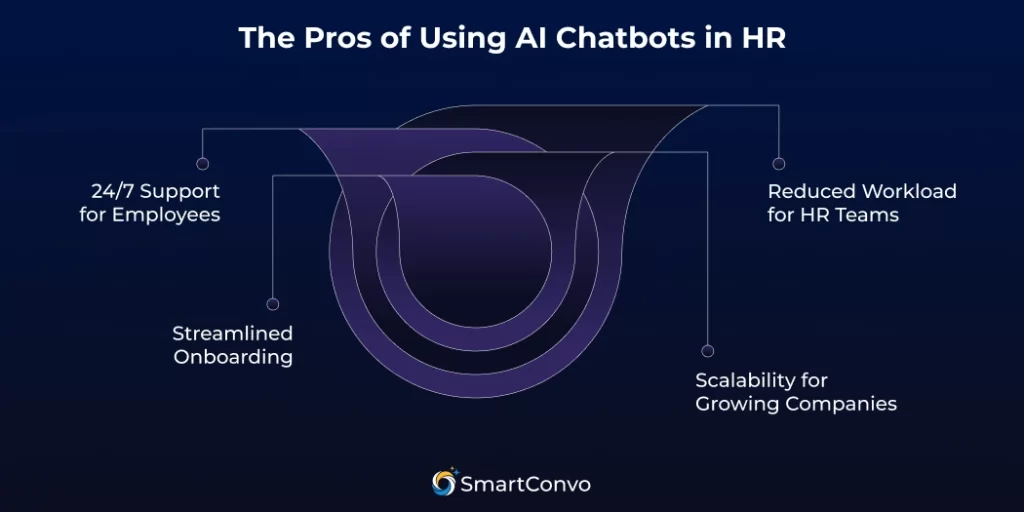
1. 24/7 Support for Employees
One of the most significant advantages of AI chatbots is their ability to provide instant, around-the-clock support. Employees no longer need to wait for HR office hours or navigate complex email chains to get answers to common questions about leave policies, payroll dates, or benefits.
2. Reduced Workload for HR Teams
Chatbots can handle up to 80% of repetitive queries, freeing HR staff to focus on higher-value tasks like employee development and strategic planning. This reduction in email and ticket volume means faster resolution times and less burnout among HR professionals.
3. Streamlined Onboarding
New hire onboarding can be a time-consuming process, but chatbots automate the delivery of onboarding materials, policy explanations, and FAQs. This ensures every employee gets consistent information promptly and reduces errors caused by manual communication.
4. Scalability for Growing Companies
For startups and mid-sized businesses with lean HR teams, chatbots offer a scalable way to meet growing employee support demands without increasing headcount. AI-powered automation helps HR keep pace with business growth efficiently.
The Cons and Limitations of AI Chatbots in HR
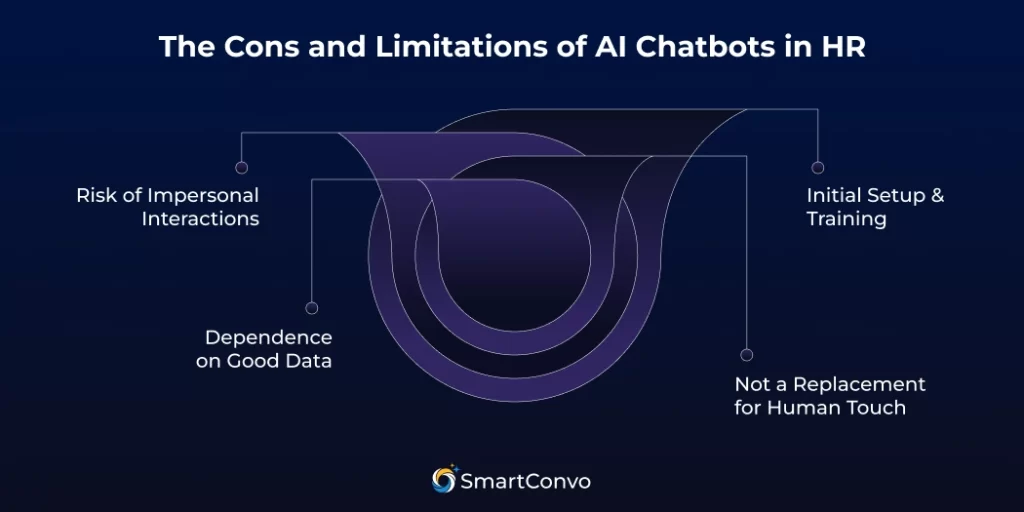
Despite their many advantages, AI chatbots come with inherent limitations and potential pitfalls that organizations must be aware of.
1. Risk of Impersonal Interactions
While AI chatbots excel at handling routine queries, they can sometimes feel impersonal, especially when employees face sensitive or complex issues like grievances or layoffs. Human empathy remains essential in these scenarios.
2. Initial Setup & Training
Implementing a chatbot isn’t a plug-and-play solution. It requires thoughtful configuration, training on company-specific policies, and ongoing updates to maintain accuracy and relevance.
3. Dependence on Good Data
AI chatbots rely heavily on the quality of their knowledge base. If the underlying data is outdated or incomplete, the chatbot’s responses may be inaccurate, leading to frustration rather than relief.
4. Not a Replacement for Human Touch
Chatbots are best viewed as assistants rather than replacements. Human HR professionals still play a critical role in managing complex, sensitive, or unique situations that AI cannot handle.
SmartConvo addresses many of these concerns with a hybrid model that seamlessly escalates complex issues to human HR staff, ensuring employees always get the right support.
Best Practices for Successfully Implementing AI Chatbots in HR
To maximize benefits and minimize drawbacks, organizations should follow these best practices:
- Start small: Pilot chatbots with simple tasks before scaling up.
- Maintain human backup: Ensure easy escalation to human HR staff for complex queries.
- Prioritize data security: Implement robust security protocols and comply with regulations.
- Focus on user experience: Design intuitive, conversational interfaces and regularly update content.
- Communicate clearly: Educate employees on chatbot capabilities and limitations.
- Gather feedback: Continuously collect user feedback to improve chatbot performance.
- Balance automation with empathy: Use chatbots to augment, not replace, human HR interactions.
Real-World Examples: How HR Teams Use SmartConvo
Consider a mid-sized tech company that implemented SmartConvo and reduced its HR email volume by 75%. SmartConvo handles common inquiries related to payroll dates, leave balances, and benefits FAQs instantly, freeing HR staff to focus on strategic initiatives.
Other common use cases include:
- Delivering onboarding checklists and answering new hire questions
- Automating leave requests and policy explanations
- Providing real-time support to employees anytime, anywhere
These real-world examples showcase how AI chatbots can dramatically improve efficiency and employee satisfaction simultaneously.
Is an AI Chatbot Right for Your HR Team?
Deciding whether an AI chatbot fits your HR team depends on several factors. If your HR staff is overwhelmed with repetitive questions, or you want to provide employees with instant answers around the clock, a chatbot can be a game-changer. Consider the volume of routine inquiries, your team size, and your goals for employee satisfaction.
SmartConvo offers a low-risk, easy-to-implement solution that doesn’t require extensive IT resources or major system overhauls. Plus, its hybrid model ensures that complex issues are smoothly handed over to human HR professionals, maintaining a personal touch where it matters most.
Conclusion
AI chatbots hold great promise for transforming HR management by automating routine tasks, improving accessibility, and delivering valuable insights. They enable HR professionals to focus on higher-value activities while enhancing employee experience through instant, consistent communication.
However, they are not a silver bullet. Chatbots have limitations in understanding complex issues, lack emotional intelligence, and raise important privacy and job displacement concerns. Organizations must carefully weigh the pros and cons and implement AI chatbots thoughtfully, combining the best of human empathy with AI efficiency.
When done right, AI chatbots can be powerful tools that revolutionize HR management—helping businesses become more agile, employee-centric, and data-driven in today’s competitive landscape.
Frequently Asked Questions (FAQ)
It's a tool that automates answers to HR queries like leave, payroll, and onboarding 24/7.
Yes. SmartConvo users report up to 3x more leads and faster response times compared to traditional forms.
Absolutely. SmartConvo uses conversational AI to deliver friendly, helpful, and brand-aligned interactions 24/7.
Yes. It connects easily with CRMs, help desks, and email platforms—no coding or IT team required.
Definitely, SmartConvo handles FAQs and common queries, reducing support tickets by up to 80%.

With 8+ years of experience as a software engineer in the IT field, an Elite in Back-end development, DevOps, and Project & Team Management. Read more