
The Pros and Cons of Using AI Chatbots for Customer Support

Written By : Shantilal Matariya

Published on : August 13, 2025

5 min read


In today’s competitive market, AI chatbots in customer support have become a game-changer for businesses aiming to enhance efficiency while maintaining quality service. These intelligent software applications use artificial intelligence and natural language processing to understand and respond to customer needs instantly, offering 24/7 assistance.
However, like any technology, there are clear pros and cons of AI chatbots that businesses must carefully consider before implementation. This blog provides a balanced and expert analysis of the advantages and challenges of using AI chatbots in customer support, helping you make informed decisions on whether this innovative solution fits your business needs.
What Are AI Chatbots and How Do They Work?
AI chatbots are software programs designed to simulate human conversation using artificial intelligence technologies like machine learning and natural language processing (NLP). Unlike simple rule-based bots that follow scripted responses, AI chatbots understand and respond to customer queries more flexibly by learning from interactions.
They handle tasks such as using AI chatbots to answer FAQs, processing orders, or troubleshooting basic issues, freeing human agents to focus on complex and sensitive cases. AI chatbots for business communication help streamline workflows and ensure customers receive quick, reliable assistance—freeing up human agents to address more complex issues.
The Pros of AI Chatbots for Customer Support
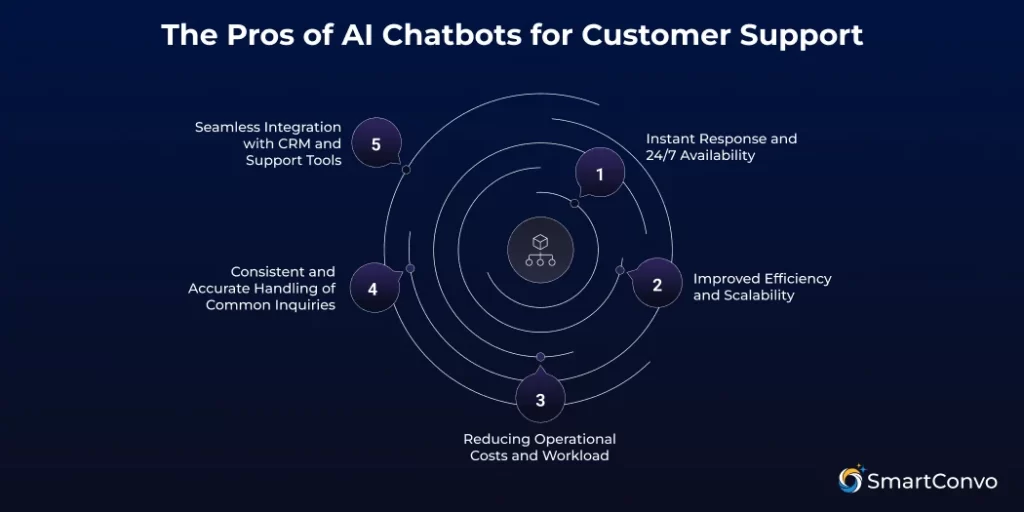
Instant Response and 24/7 Availability
AI chatbots provide immediate, round-the-clock support, ensuring customers receive timely assistance regardless of time zones or business hours. By automating routine tasks, AI Chatbots reduce average resolution time, which enhances customer satisfaction by significantly cutting wait times and resolving common inquiries instantly.
Improved Efficiency and Scalability
Unlike human agents, AI chatbots can handle thousands of customer interactions simultaneously without fatigue. This scalability enables businesses to adapt quickly to fluctuating support demands, especially during peak periods, without compromising response quality.
Reducing Operational Costs and Workload
Automating routine and repetitive tasks allows human agents to focus on more complex issues. Industry data shows that companies implementing AI chatbots have reduced operational costs by up to 30%, streamlining support workflows and optimizing resource allocation.
Consistent and Accurate Handling of Common Inquiries
AI chatbots excel at managing FAQs, order tracking, password resets, and basic troubleshooting. They provide standardized answers that ensure consistency in customer service delivery, reducing human error.
Seamless Integration with CRM and Support Tools
Modern AI chatbots easily integrate with customer relationship management systems and helpdesk software, creating a unified support ecosystem. This integration facilitates personalized interactions based on customer history and preferences, improving the overall service experience.
The Cons and Limitations of AI Chatbots in Customer Support
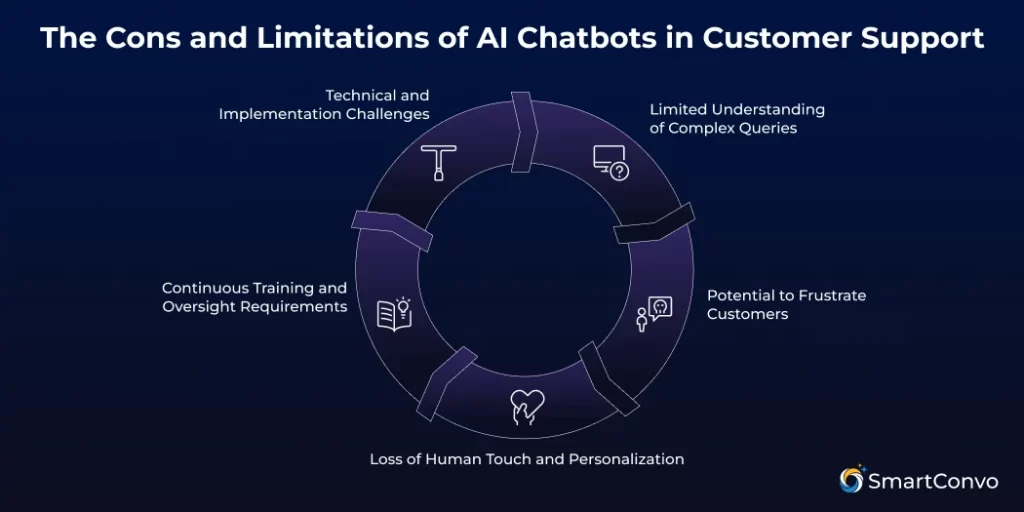
Limited Understanding of Complex Queries
While AI chatbots have advanced significantly, they often struggle with nuanced, multi-layered, or emotionally charged customer issues. This limitation can lead to customer frustration when chatbots fail to provide adequate resolutions or escalate appropriately.
Potential to Frustrate Customers
If not regularly maintained and updated, chatbot knowledge bases can deliver irrelevant or inaccurate responses. Poorly designed chatbots may confuse or annoy users, damaging brand reputation and customer trust.
Loss of Human Touch and Personalization
Automation can sometimes feel impersonal. Many customers prefer human interaction, especially for sensitive or unique problems. Over-reliance on chatbots risks alienating users who value empathy and tailored support.
Continuous Training and Oversight Requirements
AI chatbots require ongoing monitoring, retraining, and updates to remain effective and aligned with changing business needs. This ongoing commitment demands time, expertise, and resources that some organizations may underestimate.
Technical and Implementation Challenges
Integrating chatbots with existing systems and workflows can be complex and costly. Without proper planning and professional assistance, implementation can disrupt operations and create additional support challenges.
Best Practices to Maximize AI Chatbot Success
- Start with simple queries: Automate high-volume, straightforward tasks first to build confidence and effectiveness.
- Ensure smooth human escalation: Always provide clear options for customers to connect with live agents.
- Regularly update chatbot content: Keep the knowledge base current to minimize errors and frustration.
- Balance automation with empathy: Use chatbots as tools to assist, not replace, personalized human care.
Monitor and analyze performance: Collect feedback and usage data to continuously improve chatbot capabilities.
Conclusion
AI chatbots in customer support bring clear advantages—improving response times, reducing costs, and enabling scalable service. However, understanding the AI chatbot pros and cons is essential for any business looking to implement this technology effectively. While AI can automate routine tasks and provide instant support, it’s equally important to maintain a human touch where empathy and complex problem-solving are needed.
A thoughtful, balanced approach that combines AI automation with human oversight ensures that customer service remains both efficient and personalized. As AI continues to evolve, it will undoubtedly play a vital role in the future of customer support—helping businesses meet the ever-changing needs and expectations of their customers while minimizing risks.
Curious about how AI chatbots can enhance your customer service? Contact us for a free consultation—we’re here to help you explore the possibilities.
Frequently Asked Questions (FAQ)
AI chatbots offer 24/7 support, faster responses, cost savings, and handle high query volumes efficiently.
They struggle with complex queries and may lack empathy, requiring human backup for tricky issues.
By automating routine inquiries, chatbots lower workload and reduce the need for large human support teams.
Yes, AI analyzes customer data to tailor responses, but it works best when combined with human interaction.
Essential—human agents handle complex issues and supervise chatbots to ensure accuracy and customer satisfaction.

With 8+ years of experience as a software engineer in the IT field, an Elite in Back-end development, DevOps, and Project & Team Management. Read more