
20 Real-World Use Cases of AI Chatbots

Written By : Shantilal Matariya

Published on : June 23, 2025

7 min read


In an era where speed, personalization, and availability define success, AI chatbots have become an operational powerhouse. No longer limited to simple FAQ responders, these intelligent agents now drive sales, automate support, streamline operations, and improve CX across startups and enterprises alike.
If you’re asking, What is an AI Chatbot and how is it relevant today? — It’s a technology that’s reshaping business conversations. From customer support to chatbot marketing use cases, these tools are proving essential across industries. If you’re a CTO or startup founder wondering what chatbots are used for in 2025, this blog outlines 20 high-impact, real-world AI chatbot use cases—proven across industries.
Whether you run a SaaS startup, an e-commerce brand, or a logistics company, AI chatbots can help you scale smarter, not harder.
Here is Top 20 Real-World AI Chatbot Examples, including common chatbot use cases across customer service, sales, and marketing.
AI Chatbot Use Cases in Customer Service
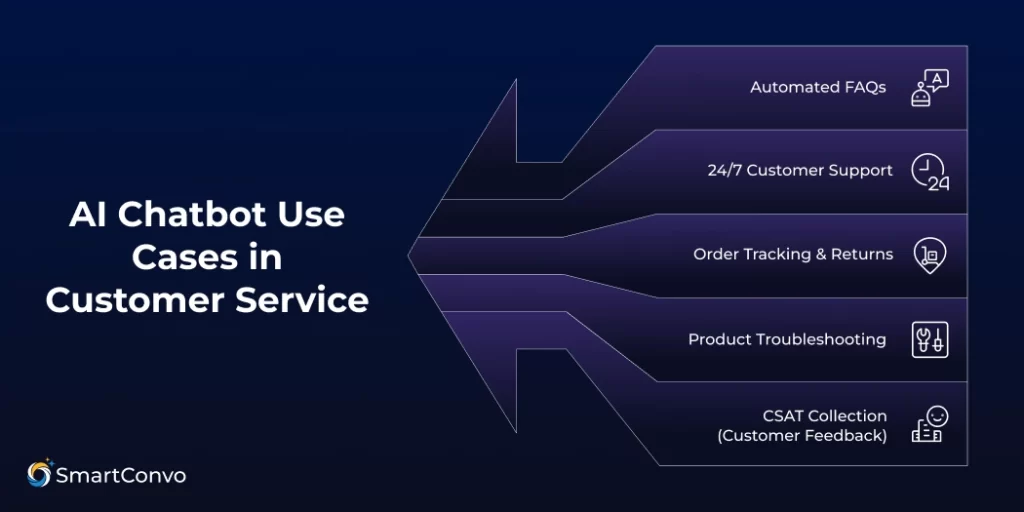
1. Automating FAQs
Use case:
Handling repetitive queries like order status, password reset, or store hours.
How it works:
The chatbot detects common questions using NLP, LLM, and pulls answers from a predefined knowledge base.
Example:
Amazon’s customer service bot answers delivery-related questions in seconds.
Impact:
Reduces support tickets by 30–50% and shortens response times.
2. 24/7 Customer Support
Use case:
Providing instant assistance outside normal business hours.
How it works:
Chatbots operate continuously on websites, apps, or messaging platforms without requiring human intervention.
Example:
SmartConvo AI chatbot handles queries globally, even when human reps are offline.
Impact:
Improves customer satisfaction and supports users across time zones.
3. Order Tracking & Returns
Use case:
Allowing users to check shipping status or start a return/exchange.
How it works:
Bots integrate with logistics APIs to fetch tracking info and automate return workflows.
Example:
Zara’s chatbot provides live shipping updates and handles return requests.
Impact:
Reduces human workload and improves post-purchase experience.
4. Product Troubleshooting
Use case:
Guiding customers through self-service problem resolution.
How it works:
The chatbot provides step-by-step solutions or instructional videos for technical/product issues.
Example:
Apple’s support chatbot helps users troubleshoot iPhone connectivity problems.
Impact:
Deflects 60–70% of Level 1 support cases.
No Credit Card Required | 14 days Free Trial
Build Your Chatbot
5. CSAT Collection (Customer Feedback)
Use case:
Gathering real-time feedback after a chat or transaction.
How it works:
The chatbot triggers a short survey post-interaction to capture satisfaction scores or comments.
Example:
Intercom bots send feedback prompts after each customer conversation.
Impact:
Improves service quality and provides actionable insights for support teams.
Chatbot Use Cases in Sales
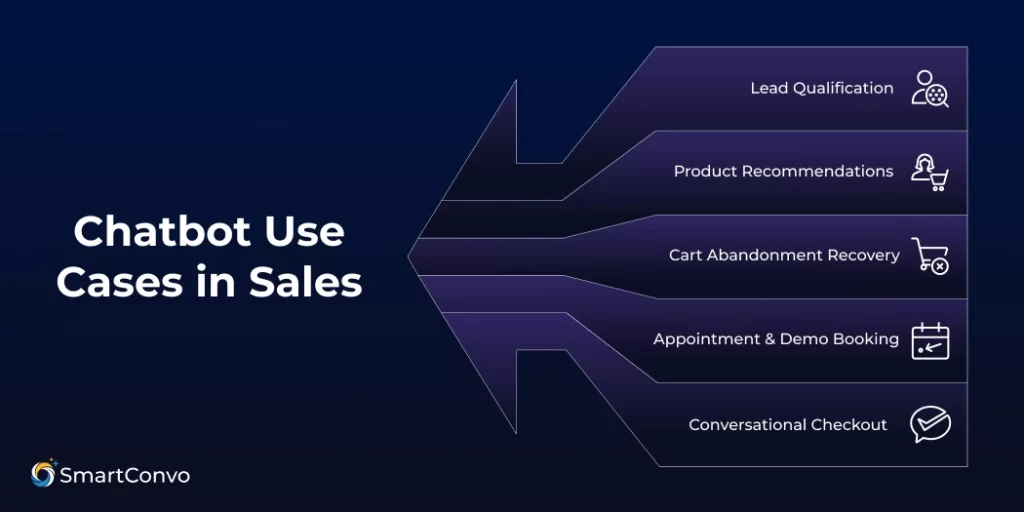
6. Lead Qualification
Use case:
Filtering out high-intent leads and routing them to sales.
How it works:
Chatbots ask pre-defined qualifying questions and score responses based on lead quality.
Example:
Drift’s AI chatbot pre-qualifies website visitors before booking meetings.
Impact:
Reduces manual lead screening and improves pipeline quality.
7. Product Recommendations
Use case:
Suggesting products based on user preferences or purchase history.
How it works:
Chatbots analyze behavior and match it to product catalog items using AI and ML.
Example:
Sephora’s chatbot offers makeup recommendations based on skin tone and preferences.
Impact:
Boosts AOV and personalizes the buying journey.
8. Cart Abandonment Recovery
Use case:
Re-engaging customers who leave items in their cart.
How it works:
Chatbots send reminders or offer incentives via email, SMS, or live chat to complete the purchase.
Example:
Many Shopify stores use Tidio bots to recover abandoned carts automatically.
Impact:
Increases conversion rates and reduces lost revenue.
9. Appointment & Demo Booking
Use case:
Enabling users to schedule product demos or sales calls without form-filling.
How it works:
The chatbot integrates with calendar tools to show availability and confirm bookings.
Example:
Calendly’s AI assistant books sales calls directly in the chat window.
Impact:
Shortens sales cycles and improves lead conversion efficiency.
10. Conversational Checkout
Use case:
Simplifying the purchasing process via chat.
How it works:
Bots assist with adding items, selecting payment methods, and completing transactions in one flow.
Example:
Domino’s Pizza chatbot lets users order food conversationally via Messenger.
Impact:
Removes friction and boosts mobile sales.
Chatbot Use Cases in Marketing
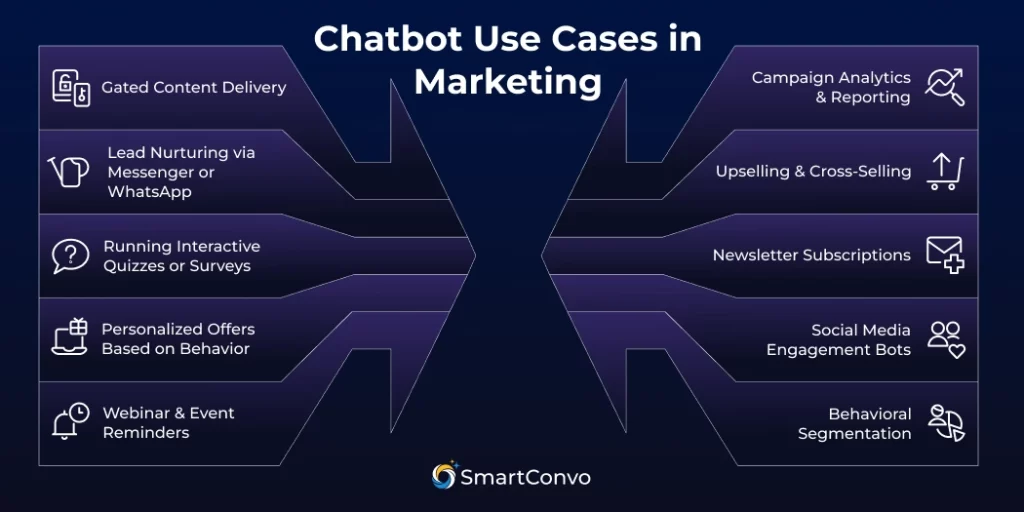
11. Gated Content Delivery
Use case:
Delivering eBooks, webinars, or reports after lead capture.
How it works:
The chatbot collects email or contact info before offering access to the asset.
Example:
HubSpot bots send eBooks after users opt in through Messenger.
Impact:
Increases lead generation without lengthy forms.
12. Lead Nurturing via Messenger or WhatsApp
Use case:
Staying in touch with prospects across platforms.
How it works:
AI bots deliver personalized follow-up messages, reminders, or updates.
Example:
WhatsApp bots send product drop alerts and reminders to high-intent leads.
Impact:
Improves engagement and reactivates cold leads.
13. Running Interactive Quizzes or Surveys
Use case:
Engaging users through chat-based experiences to collect data or segment audiences.
How it works:
Chatbots ask a series of fun, personalized questions and provide instant results or product suggestions.
Example:
BuzzFeed-style quizzes delivered via Facebook Messenger bots.
Impact:
Boosts conversion rates and helps segment leads more accurately.
14. Personalized Offers Based on Behavior
Use case:
Triggering promotions based on browsing, cart activity, or user actions.
How it works:
Chatbots track user events and respond with dynamic offers (discounts, upsells).
Example:
AI chatbots on Shopify stores send exclusive discounts after 30 seconds of inactivity.
Impact:
Improves time-on-site and conversion rates.
15. Webinar & Event Reminders
Use case:
Notifying users about scheduled webinars, product launches, or in-person events.
How it works:
Chatbots send time-based reminders via Messenger, WhatsApp, or website popups.
Example:
Many SaaS companies use bots to push event links and add-to-calendar actions.
Impact:
Reduces no-show rates and increases attendance.
16. Campaign Analytics & Reporting
Use case:
Summarizing campaign results or chatbot performance.
How it works:
AI chatbots pull real-time data from connected platforms (CRM, analytics tools) and generate quick insights.
Example:
Marketing bots on platforms like ManyChat provide campaign ROI summaries directly in chat.
Impact:
Saves time and helps marketers make faster decisions.
17. Upselling & Cross-Selling
Use case:
Recommending related or upgraded products during the buyer journey.
How it works:
The chatbot detects purchase intent and suggests add-ons before checkout.
Example:
AI chatbots suggest “frequently bought together” items in e-commerce carts.
Impact:
Increases AOV and lifetime customer value.
18. Newsletter Subscriptions
Use case:
Collecting emails or mobile numbers for newsletter opt-ins.
How it works:
A friendly chatbot pop-up encourages users to subscribe and explains the value of the newsletter.
Example:
Pop-up chatbots on blogs prompt users to get updates on new posts or deals.
Impact:
Increases subscriber base and email engagement.
19. Social Media Engagement Bots
Use case:
Automatically replying to comments and DMs to maintain brand interaction.
How it works:
Bots scan social mentions or replies and respond with predefined or AI-generated responses.
Example:
Instagram bots that reply to giveaway comments or send DMs after someone comments a keyword.
Impact:
Boosts engagement and grows your organic reach.
20. Behavioral Segmentation
Use case:
Segmenting users based on interaction patterns, device, or responses.
How it works:
AI chatbots analyze user data and assign tags or lists for personalized campaigns.
Example:
Drip chatbots create behavior-based segments for better targeting in email marketing.
Impact:
Improves personalization and campaign performance.
Conclusion
Whether it’s customer service, sales, or marketing, these chatbot use cases prove that conversational AI is not just a productivity tool—it’s a revenue and retention machine. In fact, chatbot use cases for customer service alone show how businesses can resolve queries faster, reduce support costs, and deliver 24/7 assistance that keeps customers loyal.
For tech-focused startups looking to scale lean, AI chatbots are the ultimate ally. The right use case for chatbot implementation can transform customer experience, increase revenue, and streamline internal processes.
Frequently Asked Questions (FAQ)
Yes, modern AI chatbots can support multiple workflows using conditional logic and NLP.
Startups typically see 30–50% cost savings in support and 2–3x higher engagement in sales/marketing.
Not always. You can use no-code builders, but complex bots may need developer support or agency help.
Absolutely. Even with small teams, bots help scale support, automate lead capture, and increase efficiency.

With 8+ years of experience as a software engineer in the IT field, an Elite in Back-end development, DevOps, and Project & Team Management. Read more