
The Role of AI Chatbots in Digital Transformation

Written By : Shantilal Matariya

Published on : July 21, 2025

8 min read


Businesses are working hard to keep up with fast-changing technology. Tools like artificial intelligence (AI) and cloud computing are changing what companies can do—and what customers expect.
To stay ahead, many companies are embracing these technologies to improve how they work. This big change is called digital transformation (DX). It means rethinking how businesses run, serve customers, and grow.
AI chatbots in digital transformation are playing a major role in this shift. It’s no longer just a helpful tool—it’s becoming a key part of daily operations. Businesses are using AI to work smarter, boost efficiency, and create better experiences for customers.
In this article, we’ll explain the meaning of digital transformation, share real-world use cases, and explore the benefits and challenges of using an AI chatbot in business. Let’s get started!!
What is digital transformation?
Digital transformation is about using technology to change how businesses work, compete, and provide value to customers. It means more than just adopting new tools—it requires a shift in mindset, encouraging innovation, learning from failure, and adapting to market changes.
This process often involves technologies like cloud computing, data analytics, mobile apps, social media, and artificial intelligence (AI). AI plays a main role by automating tasks, improving decision-making, and enhancing customer experiences.
Tools like machine learning and predictive analytics help businesses process data, spot trends, and act quickly.
The Importance of AI Chatbots in Digital Transformation
AI chatbots play a major role in helping businesses embrace digital transformation. As part of the growing connection between AI and digital transformation, they help link traditional processes with modern digital needs in several ways.
Firstly, AI chatbots make it easier for everyone in a company to access information and services. Employees can quickly find things like company policies, technical guides, or instructions by simply asking the chatbot. This saves time, reduces the need for help desks, and makes day-to-day work more efficient.
Secondly, the role of AI in digital transformation is especially clear when it comes to chatbots. Chatbots collect and analyze data from customer conversations, giving businesses valuable insights into customer preferences, problems, and behavior. This information helps companies make smarter decisions and improve their strategies.
AI chatbots make it easier for people to use technology by offering simple, conversational experiences. Instead of learning complicated software, users can interact with chatbots in a natural way, which helps more people adopt digital tools.
Chatbots also help businesses grow without needing to hire more staff. As companies expand and digital needs increase, chatbots can handle more tasks while keeping service quality consistent.
Benefits of AI Chatbot in Digital Transformation
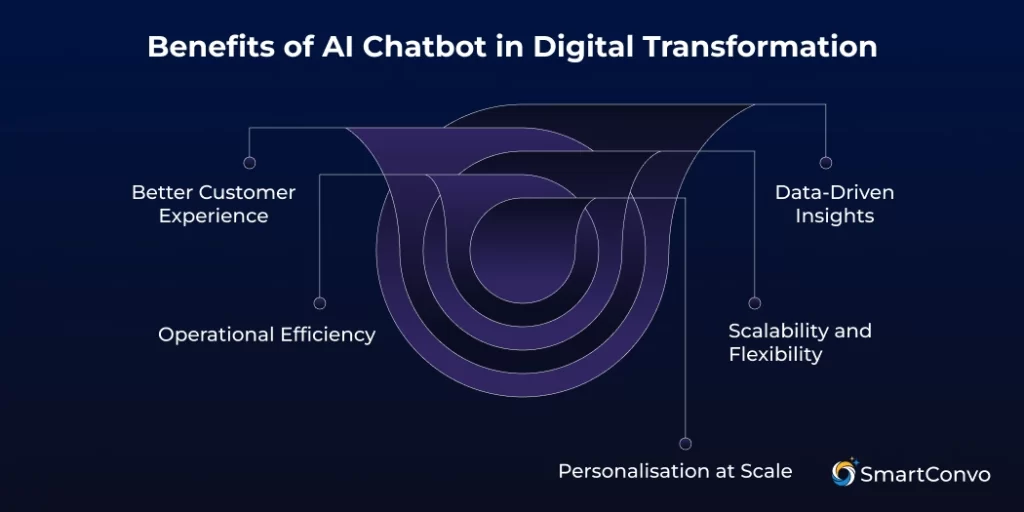
Adding AI chatbots in digital transformation efforts can bring clear benefits to many parts of a business. Knowing these benefits helps companies decide how to use chatbots effectively.
Better Customer Experience
AI chatbots are changing the way businesses interact with customers. They offer instant, personalized responses anytime, anywhere.
No more waiting for business hours or dealing with complicated phone menus. This makes it easier for customers to get help, leading to happier, more loyal customers and supporting businesses in becoming more customer-focused.
Operational Efficiency
AI chatbots simplify business tasks like answering questions, scheduling, and order tracking. They handle routine work so people can focus on bigger tasks, saving money and boosting productivity.
Data-Driven Insights
Every time a chatbot is used, it gathers useful data about what customers like, common problems, and where services can improve. This data helps businesses make smarter decisions about improving products, services, and overall strategies.
Scalability and Flexibility
AI chatbots can manage thousands of conversations at the same time without losing quality. This helps businesses grow and handle busy seasons without needing more staff or expensive upgrades.
Personalisation at Scale
Advanced AI chatbots use customer data and machine learning to create personalized experiences for every user. This kind of customization, which wasn’t possible before, gives businesses a big advantage in their digital growth.
Use Cases of AI Chatbots in Digital Transformation
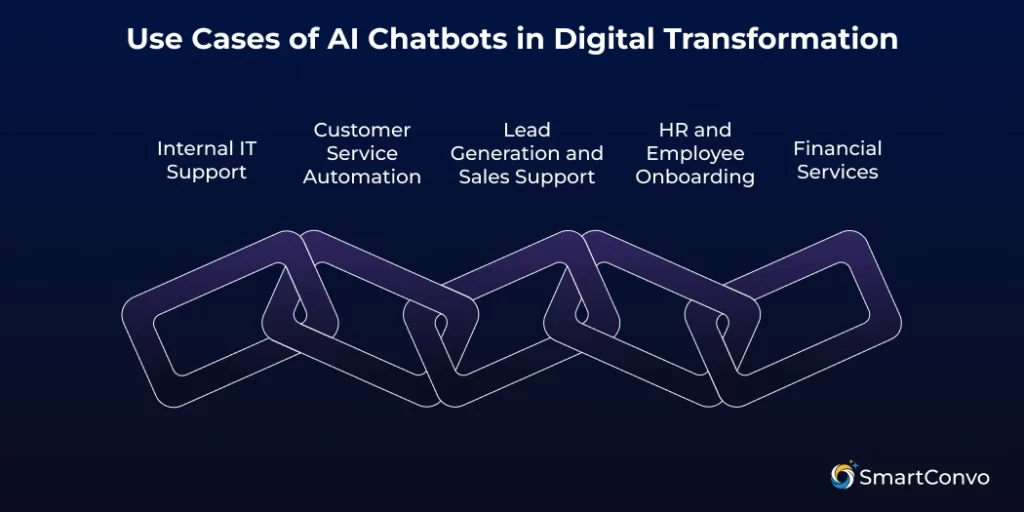
Digital transformation and AI chatbots are making a difference in many industries, showing how useful they can be for different tasks. Here are some real-world use cases of AI chatbots in digital transformation:
Internal IT Support
Organizations use chatbots to help employees with IT questions like resetting passwords, installing software, and fixing common tech issues.
These chatbots reduce the workload on helpdesks and give employees quick answers, boosting productivity and improving digital tools.
Customer Service Automation
Many companies use AI chatbots as the first point of contact for customer service. They can answer simple questions like checking account balances, tracking orders, or providing basic tech support.
If the issue is more complex, the chatbot passes the conversation to a human agent, along with all the details, so nothing gets lost.
Lead Generation and Sales Support
AI chatbots are great at helping businesses find and guide potential customers. They engage website visitors with personalized questions and suggestions, making it easier to spot promising leads.
Sales Chatbots can even schedule meetings with sales teams. This is a great example of AI chatbots for e-commerce by boosting sales and making shopping easier.
HR and Employee Onboarding
HR teams use AI chatbots to make employee onboarding easier. New hires can quickly find information about company policies, complete paperwork, and get help with benefits through simple chat tools. This makes the onboarding process faster and smoother for everyone.
Financial Services
Banks use AI chatbots to help with tasks like managing accounts, checking transactions, applying for loans, and getting financial advice. These chatbots make customer service faster and easier while lowering costs and ensuring banks follow the rules.
The use cases of AI chatbots are highly adaptable and can drive transformation in almost any industry or business function.
What are the challenges of AI chatbots in digital transformation?
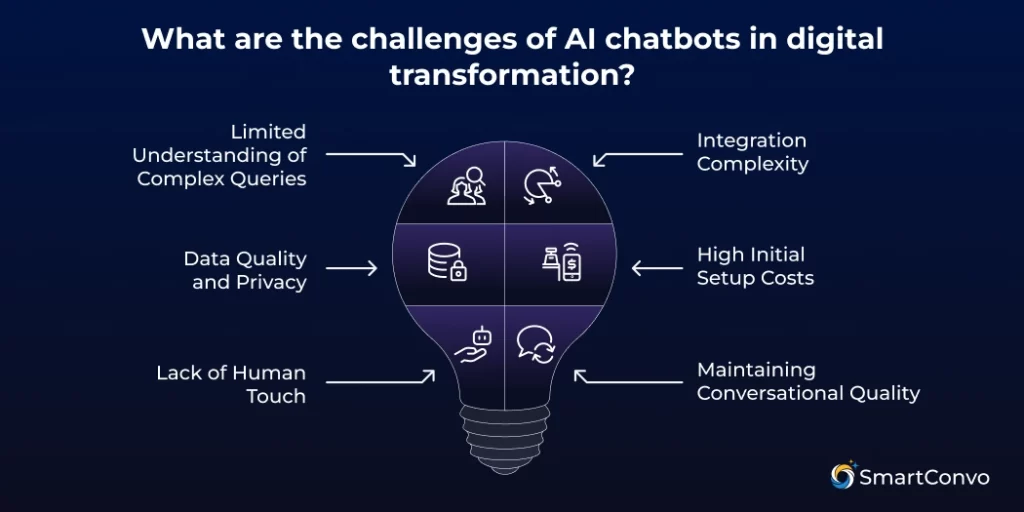
AI chatbots can be very helpful, but using them as part of digital transformation comes with challenges that organizations need to handle carefully.
Limited Understanding of Complex Queries
AI chatbots are great for simple tasks but often struggle with complex questions. This can frustrate users when answers are inaccurate or lack context. To improve, businesses need better chatbot training or smooth transitions to human agents for a better customer experience.
Integration Complexity
Integrating AI chatbots with existing systems, databases, and workflows can be tricky. Older systems often don’t have the modern tools needed to connect with chatbots, which means extra work or system updates might be required.
Data Quality and Privacy
AI chatbots need good data to work well. Organizations must make sure their data is accurate, complete, and well-organized, while also keeping it private and secure. Following rules like GDPR can make setting up chatbots more challenging.
High Initial Setup Costs
AI chatbots can be expensive to set up. Businesses need to invest in technology, integration, and training the AI with quality data. Customizing it for specific needs takes time and resources. While the upfront cost may be high, the long-term benefits like better customer experience and efficiency, make it worth it.
Lack of Human Touch
Chatbots are smart, but they’re not human. They can’t fully understand emotions, tone, or personal stories like a real person can. For customers with serious concerns or emotional issues, talking to a machine can feel cold or unhelpful. If not managed well, this could hurt the customer experience.
Maintaining Conversational Quality
Building chatbots that can handle complex conversations takes a lot of work. It requires advanced language processing and regular training. If the chatbot doesn’t perform well, it can hurt customer relationships and slow down progress.
No Credit Card Required | 14 days Free Trial
Build Your Chatbot
The Future of AI Chatbots in Digital Transformation
AI chatbots are becoming an important part of digital transformation. In the future, they will be even smarter, faster, and better at understanding people. Thanks to new technology like machine learning and natural language processing, chatbots will sound more human and respond more naturally.
Businesses will use AI chatbots for many tasks like customer support, answering questions, handling sales, and helping employees. They will also connect with more tools and systems, making work easier and faster.
Overall, AI chatbots will help companies save time, reduce costs, and give customers a better experience. They will be a big part of how businesses grow and improve in the digital world.
Conclusion
The role of AI chatbots in digital transformation is no longer just a trend—they’re a tool that helps businesses grow, connect, and compete. They make customer support faster and automate everyday tasks, helping companies work smarter in a digital world.
As technology keeps changing industries, AI chatbots are becoming even more important. They improve customer experiences and help businesses stay ahead.
Ready to boost your business with AI chatbots? Contact us to learn more about the Smartconvo AI chatbot solution!
Frequently Asked Questions (FAQ)
AI chatbots automate support, enhance CX, and improve business efficiency in digital strategies.
Chatbots boost automation, enhance CX, reduce costs, and speed up digital transformation across industries.
Absolutely. They can connect with CRM, ERP, websites, and more to create seamless user experiences.
With proper encryption and privacy protocols, AI chatbots can securely manage sensitive information.

With 8+ years of experience as a software engineer in the IT field, an Elite in Back-end development, DevOps, and Project & Team Management. Read more