
Conversational Marketing Chatbot: Benefits, Use Cases & Example

Written By : Shantilal Matariya

Published on : August 6, 2025

8 min read


Many businesses struggle to build strong connections with their customers. Traditional methods, such as emails or phone calls, can feel slow, generic, and impersonal. But customers want fast, helpful, and personalized responses—and they want them now.
So, how can businesses keep up?
That’s where conversational marketing chatbots come in.
These are intelligent, AI-powered tools that enable businesses to engage with customers in real time. Whether it’s answering questions, giving product suggestions, or helping with a problem, chatbots are available 24/7. They make communication easier, faster, and more personal—all while saving time and money for businesses.
This guide will help you understand everything you need to know about conversational marketing chatbots. We’ll explain:
- What is it
- Key Benefits for your business
- Top Use Cases across industries
- Real Examples of Brands Using Chatbots Successfully
Whether you want to improve customer support, get more leads, or build stronger customer relationships, this guide will show you how chatbots can make a big difference.
What is a conversational marketing chatbot?
Conversational marketing chatbots are smart tools that help businesses talk to customers in real time. Unlike old methods like email or phone calls, these chatbots can chat just like a human on websites, social media, or messaging apps.
They use AI and natural language processing (NLP) to understand what customers are saying and reply with helpful answers right away. This makes the conversation feel more natural and personal.
These chatbots do more than just answer questions—they can recommend products, help with buying decisions, and collect feedback. By handling common tasks automatically, they save time and improve the customer experience.
That’s why conversational marketing for chatbots is becoming a popular strategy for modern businesses. It helps brands stay connected, build trust, and grow faster in a competitive market.
Key Benefits of Conversational Marketing Chatbots

Let’s explore the benefits of conversational marketing chatbots that can help businesses grow and succeed in today’s fast-paced world.
Better Customer Experience
Modern conversational marketing bots can access customer data and conversation history to provide highly personalized interactions. They can remember previous conversations, understand customer preferences, and tailor their responses accordingly.
This level of personalization helps build stronger relationships with prospects and customers while improving the overall user experience.
Increased Lead Generation and Qualification
Conversational marketing chatbots can help you get more leads by starting real-time conversations with website visitors. Instead of filling out long forms, customers can just chat and share what they’re looking for.
The chatbot can ask the right questions, collect contact details, and figure out if someone is a good fit for your product or service. This makes it easier for your sales team to focus on high-quality leads, saving time and increasing results.
Improved Conversion Rates
When a customer visits your website and has questions, they may leave if they don’t get answers quickly. Chatbots help stop this from happening by giving instant support.
They can suggest products, answer common questions, and guide users step-by-step, which helps turn visitors into buyers or subscribers. This leads to more conversions and better results.
Reduces Marketing and Support Cost
A conversational marketing chatbot can handle many tasks that would normally need a human team, like answering common questions, qualifying leads, or helping with simple issues.
By automating these jobs, businesses can save money on customer support and marketing. There’s less need for large teams or expensive tools, and chatbots can work 24/7 without a break.
Using conversational marketing for chatbots is a cost-effective way to provide great service while keeping your budget under control.
Quick Customer Feedback
Chatbots make it easy to collect real-time customer feedback. They ask questions at key moments to measure satisfaction and gather insights on preferences or improvements. This quick, non-intrusive method helps businesses improve products and services while boosting response rates.
Improves Retargeting and Remarketing Campaigns
Chatbots make retargeting and remarketing easier by tracking user preferences and behaviors. They help businesses create personalized offers, send reminders, and provide timely follow-ups, boosting conversions and building stronger customer relationships.
Delivers Consistent Brand Messaging
Every chatbot follows the same script and brand style. This means every customer hears the same message, no matter when or where they chat—on your website, app, or social media.
It helps your business sound professional, trustworthy, and on-brand every time. You don’t have to worry about different team members giving different answers.
Top Use Cases of Conversational Marketing Chatbots
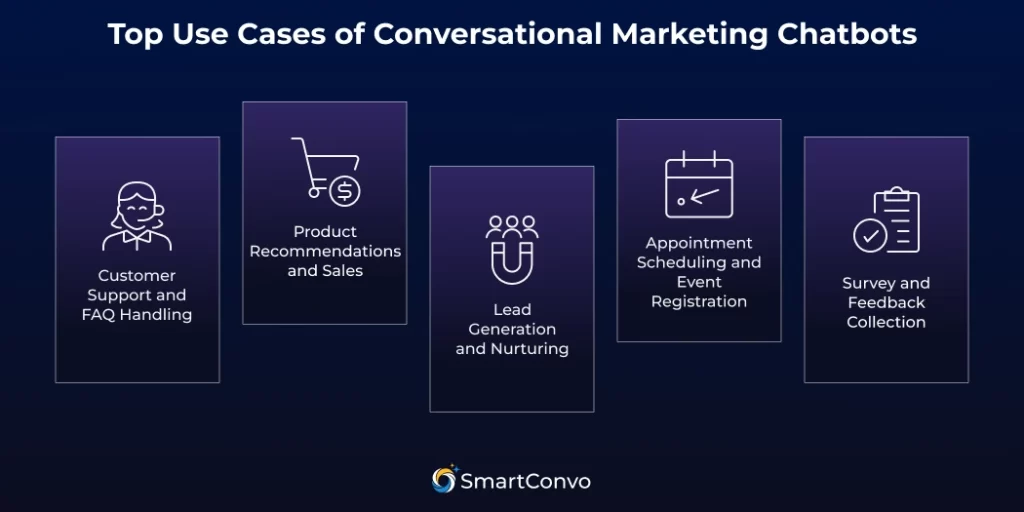
Here are some common use cases of conversational marketing chatbots that showcase their versatility and effectiveness.
Customer Support and FAQ Handling
Many customer inquiries are simple and can be answered quickly by chatbots. Automating responses to these common questions helps businesses reduce support ticket volume and provide quick help to customers.
For more complicated issues, chatbots can gather important details and pass the conversation to a human agent.
Product Recommendations and Sales
Chatbots and virtual assistants can work like online sales helpers. They ask customers about their preferences and suggest products or services that fit their needs. They can show product details, compare options, and even help place orders during the chat. This makes shopping more personal and can boost sales and conversion rate optimization.
Lead Generation and Nurturing
Chatbots can start conversations with website visitors by sending messages based on what they’re doing on your site, where they’re located, or how they found you. They can gather contact details, learn what visitors need, and share helpful content in return for their information. This automated process keeps potential customers interested and helps build trust in your products or services over time.
Appointment Scheduling and Event Registration
Many businesses use chatbots to make booking appointments and registering for events easier. Chatbots can check schedules, book appointments, send confirmations, and even help with rescheduling—all without needing a person to step in. This saves time for businesses and makes things simple for customers.
Survey and Feedback Collection
Chatbots provide an interactive and engaging way to collect customer feedback and conduct surveys. They can ask follow-up questions based on responses, gather detailed insights about customer satisfaction, and identify areas for improvement.
This conversational approach often yields higher response rates than traditional survey methods.
Top Conversational Marketing Chatbot Examples
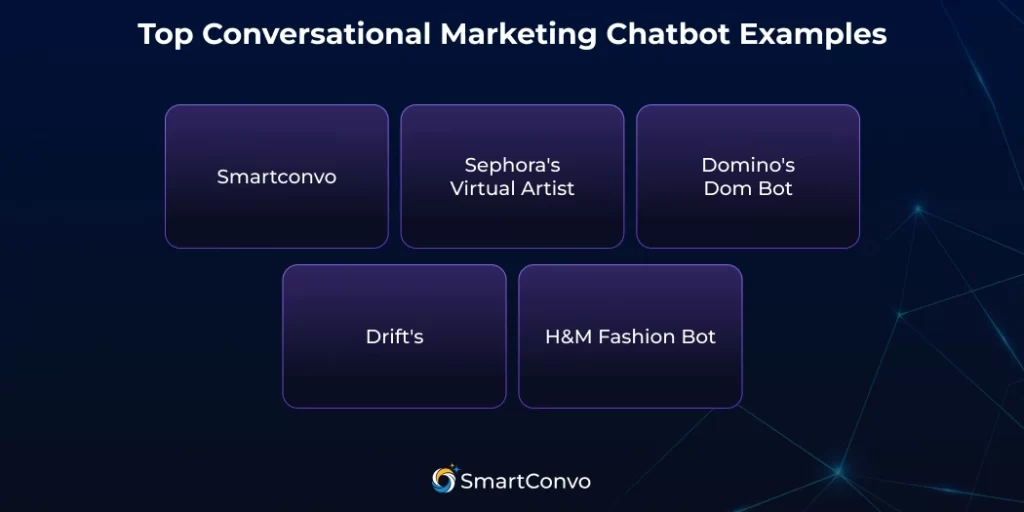
Smartconvo
Smartconvo is a chatbot that helps businesses talk to website visitors in real time. It starts conversations, asks helpful questions, and collects contact details from potential customers. This makes it easier for businesses to find and connect with people who are interested in their products or services. Smartconvo saves time by automating these chats and helps turn more visitors into leads and customers.
Sephora’s Virtual Artist
Sephora’s chatbot gives customers a fun and personal shopping experience. It shares beauty tips, suggests the right products, and even lets users try on makeup virtually. Customers can upload a photo and see how different products will look on their face before they buy. This makes shopping easier and helps people feel more confident about their choices.
Domino’s Dom Bot
Domino’s chatbot, Dom Bot, makes ordering pizza fast and easy. Customers can use it to place orders, choose their favorite toppings, and even track their delivery—all in a chat. The bot is simple to use, so people can order food quickly, even when they’re busy or on the go.
By giving quick service and a smooth experience, Dom Bot keeps customers happy and helps build strong loyalty to the Domino’s brand. It also shows how chatbots can help businesses work more efficiently.
Drift’s
Drift uses conversational marketing tools to connect with website visitors and qualify leads. Their chatbot recognizes returning visitors, personalizes messages based on company details, and quickly directs qualified prospects to the right sales reps.
H&M Fashion Bot
H&M’s chatbot helps customers find clothes they’ll love by giving style suggestions based on their taste. It asks simple questions, like what colors or clothing types they prefer, and then shows matching items.
The chatbot can also help users shop online or find the nearest H&M store. This fun and personal way of shopping makes it easier for customers to find what they want and has helped H&M connect better with online shoppers.
Conclusion
Chatbots and conversational marketing are both changing the way businesses connect with customers. They make communication faster, more personal, and more efficient. By using chatbots, companies can improve customer service, generate more leads, and save time.
To get the best results, it’s important to choose the right chatbot platform, design clear conversations, and keep improving based on customer feedback. Chatbots can also work well with other tools like email marketing or sales systems to create a smooth customer experience.
The future of marketing is all about real-time conversations. Businesses that start using chatbots now will be better prepared to grow and meet customer needs in a competitive world.
Frequently Asked Questions (FAQ)
A chatbot that chats with users in real time to engage, support, and convert leads.
They offer instant, 24/7 help with quick answers and personalized recommendations.
Better engagement, more leads, higher conversions, and lower support costs.
On websites, apps, social media, and messaging platforms like WhatsApp.
Yes, by guiding users, solving doubts, and recommending the right products.

With 8+ years of experience as a software engineer in the IT field, an Elite in Back-end development, DevOps, and Project & Team Management. Read more