
Multilingual AI Chatbot: What it is, Benefits & How to Build

Written By : Shantilal Matariya

Published on : July 18, 2025

8 min read


Imagine visiting a website, asking a question, and getting an instant response—in your own language. No confusing translations. No delays. Just clear, helpful answers.
That’s the power of a multilingual AI chatbot.
As businesses expand globally, offering support in just one language isn’t enough. Customers expect fast, personalized help in their preferred language. Unfortunately, most AI chatbots only work in one language, leaving many users frustrated or ignored.
A multilingual AI chatbot changes that by:
- Understanding and replying in multiple languages
- Detecting a user’s preferred language automatically
- Providing answers tailored to the local context
Whether you’re a global company or a growing startup, a multilingual AI chatbot helps you connect with more customers, no matter where they’re from or what language they speak.
In this guide, you’ll discover:
- What a multilingual AI chatbot is
- Why it’s essential for modern businesses
- Its benefits for customer support, sales, and engagement
- How to build one
Ready to serve a global audience and elevate your customer experience? Let’s dive in!
What Is a Multilingual AI Chatbot?
A multilingual AI chatbot, also known as a multi language chatbot, is a virtual assistant that can chat with users in different languages. Thanks to natural language processing (NLP) and machine learning, it detects the user’s language, understands their message, and replies in the same language, quickly and accurately.
Other chatbots that only work in one language (usually English), multilingual chatbots can communicate in many languages.
Multilingual chatbots are used on websites, apps, and messaging platforms to provide 24/7 customer support, answer questions, assist with purchases, and guide users, no matter what language they speak.
Also, multilingual AI chatbots help businesses connect with a global audience, remove language barriers, and improve customer experiences.
Why Businesses Need a Multilingual AI Chatbot
The digital marketplace has opened doors for businesses to reach global audiences, but it also brings communication challenges. Modern customers expect fast, personalized support in their preferred language, no matter where they are or when they need help.
Studies show 75% of people prefer buying in their native language, but hiring multilingual support teams is costly and complex. Businesses must also maintain consistent quality across languages and cultures.
This is where a multi language chatbot plays a vital role. By providing automated yet personalized conversations in multiple languages, businesses can deliver seamless support without the overhead of large human teams.
Offering multilingual support isn’t just about customer satisfaction—it boosts conversions, reduces churn, and builds loyalty. It also helps businesses confidently expand into new markets with the right support from day one.
Key Benefits of Using a Multilingual AI Chatbot

Better Customer Experience
Multilingual chatbots make customers happier by breaking down language barriers. They let people chat in their preferred language without waiting for translators or dealing with bad translations.
This quick and personal experience helps build trust and makes everyone feel included.
Cost-Effective Global Support
Providing support in multiple languages usually means hiring native speakers for each language, which can be expensive.
A multilingual chatbot solves this by offering 24/7 support in many languages with just one setup. It cuts down on staffing costs while keeping service quality high.
Improved Response Times
An AI chatbot in different languages can handle many conversations at the same time, even with people speaking different languages. This speed is especially important in competitive markets, where quick responses boost customer happiness and sales.
Boost customer engagement
Multilingual chatbots improve customer engagement by speaking in their preferred language. They build trust, offer personalized recommendations, answer questions, and guide users through purchases.
This creates a smooth experience, strengthens relationships, and boosts brand loyalty.
Data-Driven Insights
Multilingual chatbots gather useful data about what customers like, common problems they face, and how they communicate in different languages. This helps businesses improve their products, services, and marketing to better suit regional audiences.
These benefits of AI chatbots help businesses grow by making customer interactions faster, improving satisfaction, and boosting efficiency.
How Does a Multilingual AI Chatbot Work?
A multilingual chatbot works by combining several technologies to ensure smooth communication across different languages.
First, it uses language detection. Advanced algorithms quickly identify the language of a message, often within the first few words. They look at things like character sets, grammar, and vocabulary, even recognizing when users mix languages in one conversation.
Next, natural language processing (NLP) steps in. This helps the chatbot understand the meaning behind a message, including context, intent, and even sentiment. It’s more than just translating words—it ensures the response meets the customer’s needs.
When it’s time to reply, the multilingual chatbot generates a response in the customer’s language, keeping the brand’s tone and style. It adapts to cultural norms, preferred levels of formality, and regional differences to make the reply feel natural and authentic.
Finally, machine learning helps the chatbot get smarter over time. By analyzing conversations, feedback, and successful resolutions, it learns to understand things like dialects, slang, and changing language trends.
This combination of technology is learning how to make multilingual chatbot effective, adaptable, and customer-friendly.
Step-by-Step Guide: How to Build a Multilingual AI Chatbot
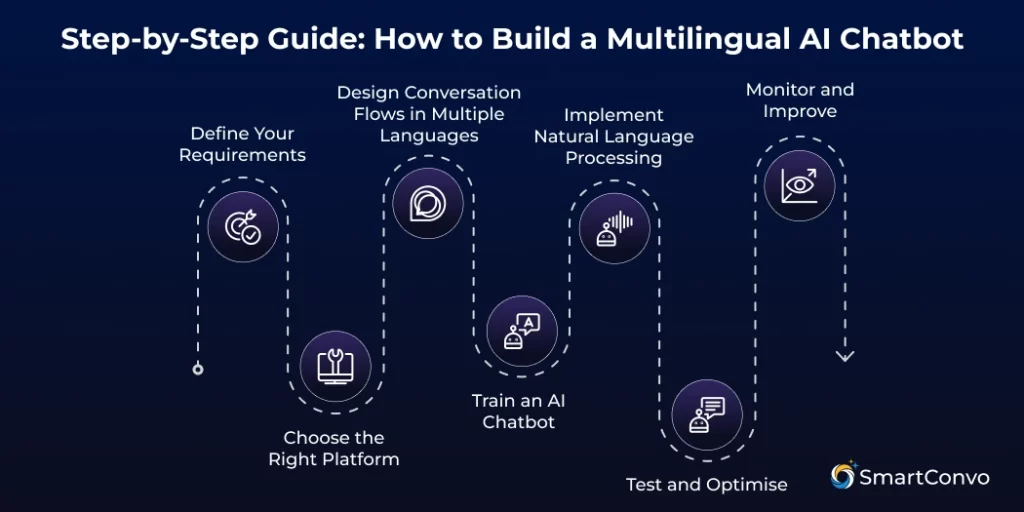
Building an AI chatbot might seem tricky, but it’s simpler than you think with the right tools. Follow these easy steps to create a chatbot from scratch—no advanced coding skills needed!
1. Define Your Requirements
First, figure out which languages your business needs to support and why. Think about your customers, market size, and business goals. Then, list what each language needs, like formal or casual tone, technical terms, and cultural differences.
2. Choose the Right Platform
Choose a Chatbot platform that supports multiple languages and works with your current systems. Some popular options are SmartConvo, Botpress, and Microsoft Bot Framework.
Look for platforms that are easy to scale, integrate smoothly, support the languages you need, and fit your budget.
3. Design Conversation Flows in Multiple Languages
Build conversation flows that work well in any language or culture. Keep in mind that different languages can change conversation length, formality, and user expectations.
Create flexible flows that adapt to different communication styles while still working smoothly.
4. Train an AI Chatbot
To train an AI chatbot effectively, start by creating training datasets for each target language. Include common phrases, questions, and responses.
Collect real customer conversations, translate content accurately, and make sure it’s culturally appropriate. High-quality training data is key to building a multilingual chatbot that performs well.
5. Implement Natural Language Processing
Set up your chatbot to understand and handle multiple languages at the same time. This means enabling it to detect the language, recognize user intent, and extract key details for each supported language.
Test how well it switches between languages during a conversation and handles mixed-language inputs.
6. Test and Optimise
Test your chatbot with native speakers of each target language to spot issues with accuracy, cultural fit, and user experience.
Ask for feedback on how well the chatbot responds, how relevant the answers are, and how satisfied users feel. Use this feedback to improve your chatbot before launching.
7. Monitor and Improve
Use analytics tools to track how your AI chatbot multilingual setup performs in different languages. Keep an eye on things like how often issues are resolved, customer satisfaction, and completed conversations. These insights will help you make your chatbot better and more useful over time.
No Credit Card Required | 14 days Free Trial
Build Your Chatbot
Future Trends in Multilingual AI Chatbots
The development of multilingual AI chatbots is moving quickly, thanks to advancements in technology and the need for global customer support. Here are some key trends shaping their future:
- Voice-enabled chatbots: Chatbots are now more advanced, letting customers talk in their preferred language instead of typing. This is especially important in places where people prefer speaking over texting.
- Emotional intelligence: Chatbots are learning to understand and respond to emotions, making conversations more empathetic and effective, even across different cultures.
- Better real-time translation: Chatbots can now support more languages and dialects with higher accuracy, allowing businesses to reach new customers and markets.
- Integration with AR and VR: Chatbots are being combined with augmented reality (AR) and virtual reality (VR) to create immersive, multilingual experiences. This is particularly useful in industries like retail, tourism, and education.
These innovations are making multilingual conversational AI chatbots smarter and more useful than ever!
Conclusion
A multilingual AI chatbot is a smart and powerful way to connect with customers worldwide. It helps you offer faster support, improve customer satisfaction, and grow your business across different languages and regions.
With the right tools and steps, you can easily create a chatbot that understands and responds in multiple languages—no coding experience needed.
If you’re ready to grow your business, reach a wider audience, and future-proof your customer service, a Smartconvo AI chatbot is the way forward.
Frequently Asked Questions (FAQ)
It improves customer experience, expands your global reach, and reduces support costs by offering instant, personalized help in multiple languages—24/7.
Basic chatbots launch in 1–3 weeks; complex ones with many languages may take 2–3 months.
Top platforms include ChatGPT, Rasa, and no-code tools like Smartconvo, Tidio, Landbot, or ManyChat with multilingual support.
E-commerce, travel, finance, and tech firms benefit most due to global reach and language needs.

With 8+ years of experience as a software engineer in the IT field, an Elite in Back-end development, DevOps, and Project & Team Management. Read more