
How to Build an AI Chatbot Persona in 2025

Written By : Shantilal Matariya

Published on : September 2, 2025

10 min read


In today’s digital world, speed and availability aren’t enough—customers want conversations that feel personal and engaging. AI chatbots can handle a lot of questions at once, but what really makes them stand out is their persona. A chatbot’s persona is its personality—how it talks, reacts, and interacts with users.
By 2025, businesses can’t rely on chatbots that feel robotic or boring. Customers expect chatbots to match a brand’s style, whether that’s friendly, professional, or funny. A strong persona makes your chatbot more relatable and trustworthy.
In this blog, we’ll show you How to Build an AI Chatbot Persona in 2025. You’ll learn the key steps and tips to design a chatbot that connects with users. Plus, we’ll explain how SmartConvo helps you build engaging personas that improve customer relationships.
What Is an AI Chatbot Persona?
An AI chatbot persona is like the personality you create for your virtual assistant. It defines how your chatbot talks, the tone it uses, and how it represents your brand. Think of it as designing a character that speaks for your company in every interaction.
Your chatbot’s persona includes its words and reactions to emotions. Does it speak formally or casually? Is it serious and helpful, or fun and playful? These choices shape how customers view your brand.
A good persona also involves AI chatbot personality customization—adjusting traits, tone, and responses to match your audience while staying consistent. This ensures a chatbot feels real and reliable across all touchpoints.
Today’s AI agents are more advanced, adapting their tone and style to match the customer’s mood or situation while staying true to their personality.
Why AI Chatbot Persona Matters in 2025
The digital world is evolving, and customer expectations are higher than ever! Here’s why a chatbot with personality and emotional intelligence matters:
- Customers value emotional intelligence: 67% prefer chatbots with personality that make them feel understood.
- Stand out from competitors: A unique chatbot personality sets your brand apart and builds loyalty.
- Build trust: Friendly, consistent bots make customers feel comfortable and confident.
- Boost sales: Chatbots now guide decisions, suggest products, and drive loyalty.
- Better AI, better connections: With Natural Language Processing (NLP), chatbots now create more natural, human-like interactions.
A chatbot with personality isn’t just nice to have—it’s a key to creating meaningful connections and growing your brand.
Step-by-Step Guide: How to Build an AI Chatbot Persona
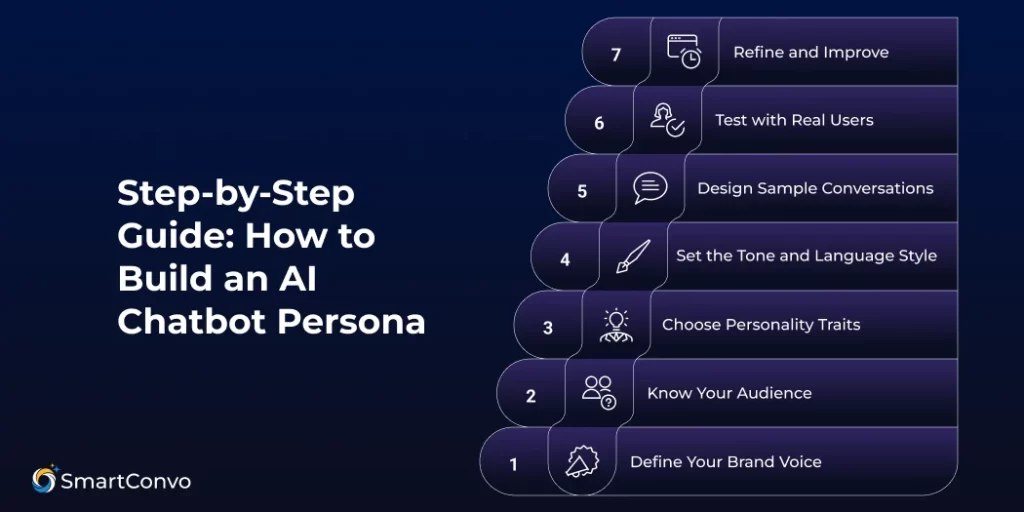
Creating your perfect AI chatbot persona is an exciting creative process that requires strategic thinking and careful planning. Let me guide you through the steps to make your chatbot a key part of your customer experience!
Step 1: Define Your Brand Voice
Your chatbot should feel like a part of your brand, not something separate. Start by looking at your brand’s voice. Are you professional and serious, or friendly and casual? Do you use technical terms or keep things simple?
Write down your brand’s key values and personality. For example, if your company values creativity, your chatbot should give innovative and creative answers. If trust and reliability are important, your chatbot should be confident and always provide accurate, helpful information.
Consistent voice strengthens your brand and creates a seamless customer experience—whether users are engaging with your site, support team, or Knowledge Base.
Step 2: Know Your Audience
To build an AI chatbot persona effectively, you need to understand your audience. Start by learning about your customers—who they are, what they like, how they communicate, and the challenges they face. Consider the language they use and how they interact.
Create customer personas to represent your key audience groups. Include details like age, job, technical skills, cultural background, and communication style. For example, a chatbot for tech-savvy millennials will sound very different from one for business executives.
Review your customer service interactions to identify common questions. This will help you train your chatbot to respond naturally and effectively.
Step 3: Choose Personality Traits
Choosing the right personality traits is key to making your chatbot feel authentic! Pick 3-5 traits that match your brand and appeal to your audience. Traits like helpful, friendly, professional, or even funny can work well.
Be clear about how these traits will show up in conversations. For example, if your chatbot is “helpful,” will it offer multiple solutions, suggest resources, or follow up with users?
This is where AI chatbot personality customization plays a huge role—making sure traits align with real customer needs.
Step 4: Set the Tone and Language Style
Your chatbot’s tone and language should align with your brand and audience preferences. Decide if it will use formal or informal language, how it explains technical terms, and how enthusiastic it is in different situations.
Set clear language rules. Will it use casual phrases, contractions, slang, emojis, or formal words? These choices shape how people perceive your chatbot.
Think about how the chatbot’s tone should change depending on the situation.For global audiences, consider designing a Multilingual AI Chatbot that can adapt tone and style across different languages and cultural contexts, ensuring inclusivity and a consistent brand voice worldwide.
Step 5: Design Sample Conversations
Creating sample conversations is a key step in building your AI chatbot’s personality. These examples act as templates to keep your chatbot’s responses consistent and clear.
Design conversations for common tasks like answering product questions, troubleshooting, or checking order statuses. Define how your chatbot will greet users, answer questions, and guide them to solutions while staying true to its personality.
Also, plan for trickier situations, like handling complaints, technical issues, or questions it can’t answer. Think about how your chatbot can respond calmly and keep customer trust.
Step 6: Test with Real Users
Testing your AI chatbot with real users is important to make sure it works well and the personality fits your audience. Start by asking a small group of customers or employees to give honest feedback.
Focus on numbers like how often conversations are completed and how satisfied users are with the responses. Also, listen to their feelings—does the chatbot seem helpful and engaging, or does it feel off?
Look for common themes in the feedback. If multiple people say the chatbot feels too formal or casual, it’s a sign to adjust. Use this feedback to improve your chatbot before the full launch.
Step 7: Refine and Improve
Creating a great AI chatbot persona takes time and ongoing improvements. Use feedback from testing to tweak its personality, language, and how it interacts in conversations.
Keep an eye on how your chatbot is performing. Are customers happy with it? Are they completing tasks successfully? Figure out what’s working well and what needs fixing.
Be ready to adapt. As your business grows, your audience changes, or new technology comes out, you might need to update your chatbot to keep it useful and effective.
Key Elements of a Successful AI Chatbot Persona
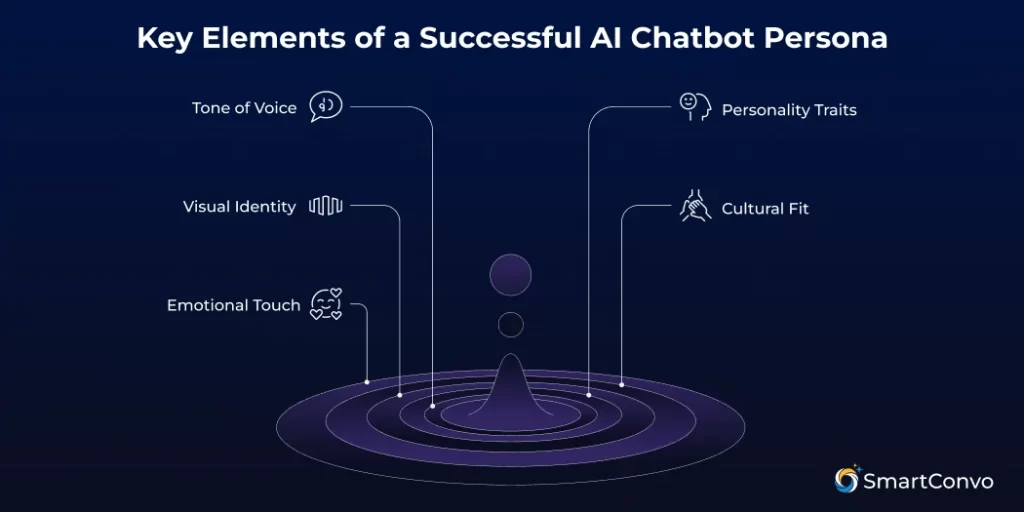
To create a great AI chatbot persona, you need to focus on a few key things that make it easy and enjoyable for users. Here’s what makes a chatbot stand out and be memorable!
Tone of Voice
Your chatbot’s tone shapes how it “speaks” and impacts how users feel. It’s not just the words but how they’re delivered. The right tone makes users feel welcome, while the wrong one can frustrate them.
Consistency is key to building trust. Whether greeting users, solving issues, or handling complaints, your chatbot’s tone should stay the same. This helps users know what to expect and feel confident in your brand.
Personality Traits
The personality traits you choose for your chatbot shape how it interacts with users. These traits should match your brand values and what your audience expects.
A strong personality makes your chatbot feel more human and relatable. When it shows traits like patience, friendliness, or humor, people are more likely to chat longer and have a positive view of your brand.
Visual Identity
Chatbots may be all about conversation, but visuals matter too! Things like avatars, colors, fonts, and interface design can help show your chatbot’s personality.
A friendly chatbot might use warm colors and casual fonts, while a professional one may prefer sleek designs and formal fonts. Consistent visuals and tone make the chatbot feel real and improve user experience. When everything aligns, users connect better with your chatbot and brand!
Cultural Fit
To build an AI chatbot that connects with diverse audiences, respect cultural differences by adjusting its tone, humor, or formality to fit users’ backgrounds.
For example, what feels casual and friendly in one culture might seem rude or unprofessional in another.If your audience is global, create a chatbot persona that’s inclusive and free of cultural assumptions or confusing references. Keep it neutral and engaging for everyone!
Emotional Touch
Adding emotional intelligence to your AI chatbot helps it connect better with users. Teach it to recognize emotions in messages and respond with empathy, encouragement, or celebration.
Your chatbot shouldn’t act like a therapist, but it should acknowledge feelings and respond supportively. For example, if a customer is frustrated, it should show empathy instead of giving a generic reply.
Why SmartConvo Is the Best Platform for Building AI Chatbot Personas
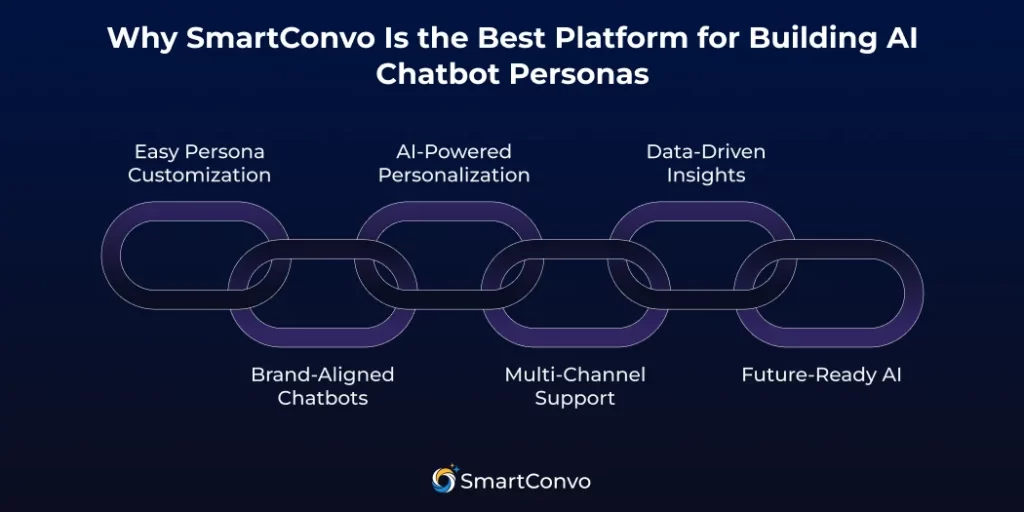
I’ve used many chatbot platforms, but SmartConvo stands out for making AI chatbot personality customization simple and powerful.! It gives you all the tools to create, test, and launch chatbots with personalities that really engage your audience.
Easy Persona Customization
SmartConvo’s tools let you easily define your chatbot’s personality with adjustable tone, style, and responses using a simple drag-and-drop interface. Whether professional, friendly, or playful, you can customize it to match your brand’s voice.
Brand-Aligned Chatbots
Make sure your chatbot matches your brand by uploading your guidelines, tone of voice, and scripts. SmartConvo analyzes data to suggest personality traits and communication styles that match your brand, ensuring a consistent and engaging user experience.
AI-Powered Personalization
SmartConvo’s AI adapts your chatbot’s personality to match each user’s preferences and behavior while keeping its core traits. This creates natural, personalized interactions that build stronger connections and boost user satisfaction.
Multi-Channel Support
Deploy an engaging chatbot persona across websites, social media, and mobile apps for a seamless user experience. Centralized management lets you update, monitor, and optimize performance for consistent communication and stronger audience connections.
Data-Driven Insights
Track user engagement, response times, and satisfaction with SmartConvo’s advanced analytics to gain valuable insights into your chatbot’s performance. Use this data to refine your chatbot, improve conversations, and create a more engaging experience for your audience.
Future-Ready AI
SmartConvo evolves with the latest AI, constantly improving to deliver better conversations. Your chatbot gets smarter over time with enhanced language understanding, emotional intelligence, and personalized interactions.
Conclusion
Creating an AI chatbot persona requires creativity and planning. A great persona doesn’t just answer questions—it builds connections with your customers. When your chatbot reflects your brand’s values and speaks your audience’s language, it becomes a trusted part of their experience.
This isn’t a one-time job. The best chatbot personas are developed through constant testing, feedback, and updates. As your business grows and customer needs change, your chatbot should evolve too—while keeping the personality that makes it unique.
Great customer service is about creating real, human-like interactions. By working on your chatbot persona now, you can stand out in the future. With tools like SmartConvo, you can build AI chatbot personas that feel natural, empathetic, and brand-aligned. More than just support bots, they become digital companions that foster trust, loyalty, and long-term growth.
Frequently Asked Questions (FAQ)
It’s the voice, tone, and personality that shapes how your chatbot talks to users.
It makes chats feel human, builds trust, and creates better customer experiences.
Define your brand voice, pick traits, set tone, test with users, and refine.
Yes, a clear persona feels relatable, which boosts trust and engagement.
SmartConvo makes persona building easy with AI tools and customization.

With 8+ years of experience as a software engineer in the IT field, an Elite in Back-end development, DevOps, and Project & Team Management. Read more